
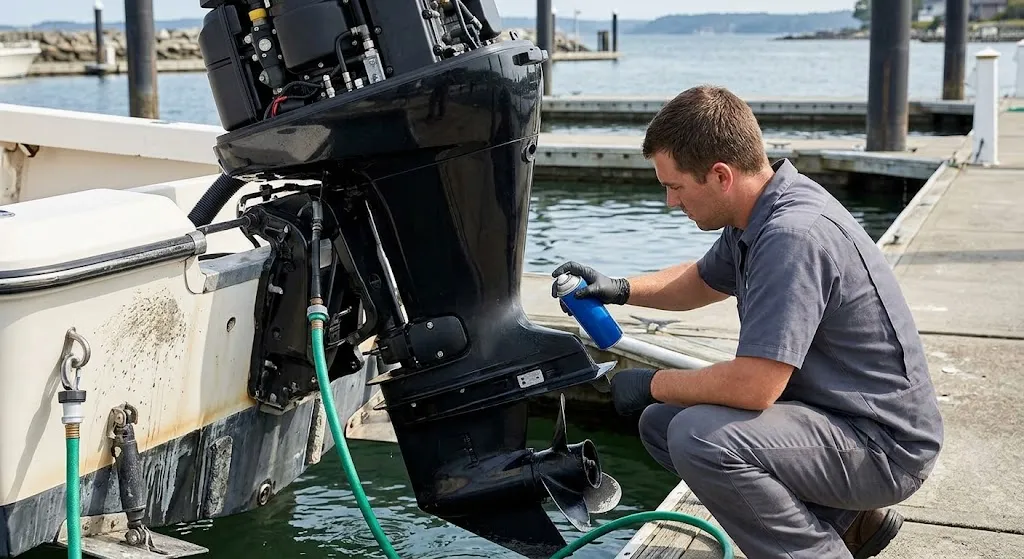
Salt is relentless. It creeps into every crevice, eats at metal, and turns a healthy engine into a crusty, struggling machine if you let it. Anyone boating along the coast should treat corrosion care as a core habit. If you are weighing a Mercury outboard for sea use, this guide shows how to keep it healthy for years.
Understanding Why Salt Is So Harsh
Saltwater conducts electricity far better than fresh water, which speeds up galvanic corrosion between different metals. Add warm temperatures and constant splashing, and even strong alloys can start to deteriorate surprisingly fast. Even stainless steel is not immune when conditions are harsh enough.
Salt also dries into stubborn crystals inside cooling passages, narrowing them over time. That buildup restricts water flow, causing the engine to run hotter than it should and shortening its useful life.
Rinse Immediately, Every Time
The single most effective habit is flushing the engine with fresh water after every outing. Connect a hose to the flushing port or use muffs, then run the motor until the water has cleared the system. It takes only a few minutes, yet the payoff is enormous.
Do not postpone this task until the weekend. Salt left to dry overnight begins to bond with surfaces, and the longer it sits, the harder it becomes to remove without damaging protective coatings. Teach everyone in your crew the routine so it never gets forgotten.
Protective Sprays and Coatings
After rinsing and drying, apply a marine-grade corrosion inhibitor to exposed metal parts, wiring connectors, and engine surfaces beneath the cowling. These products leave a thin shield that repels moisture and slows oxidation. Reapply after heavy use or if you notice the film has worn away.
Touch up chipped paint immediately as well. A tiny scratch exposes bare metal, and corrosion can spread underneath surrounding paint before you notice anything is wrong from the outside.
Sacrificial Anodes Do the Hard Work
Anodes are small metal pieces designed to corrode instead of your engine. They give up their material gradually, protecting more valuable components. When they are eaten away, they must be replaced. They are cheap, replaceable, and very effective at their job.
Inspect them every few months. If an anode looks more than half gone, swap it out. Keeping fresh anodes in place is one of the cheapest forms of insurance available to any saltwater boater. Ask a technician which type suits your water, since zinc, aluminum, and magnesium behave differently.
Pick Features Built for the Sea
Look for engines described as designed for marine environments, with durable finishes, stainless hardware, and sealed electrical connectors. Quality materials do not eliminate corrosion, but they give you a head start. Think of it as buying durability along with power.
Comparing a few outboard motors for sale side by side shows how finish and construction vary between models. Slightly higher purchase prices often pay for themselves in years of reduced repairs and better resale value.
Tilting and Storage Habits
If your boat sits in the water between trips, tilt the engine up when it is not in use. Leaving the lower unit submerged invites marine growth, barnacles, and constant exposure to corrosive conditions. Good habits at the dock matter more than expensive products.
For trailer storage, rinse the whole rig, dry it well, and keep the engine in a shaded, ventilated spot. Direct sun and trapped humidity create their own set of problems, even without salt present.
Electrical and Wiring Protection
Salt and electricity make a poor partnership. Check all plugs, battery terminals, and wire connectors for green or white crusty deposits. Clean them gently, and coat them with dielectric grease to seal out moisture before it spreads. Do not ignore smells like burnt rubber or a sudden change in engine sound.
Replace any frayed or brittle wiring promptly. A single failed connection can leave you without starting power far from shore. Keeping the electrical system healthy is every bit as important as caring for the metal parts. Keep a simple record of each inspection to track how fast things change.
Conclusion
Some warning signs deserve expert attention: green crusty deposits on terminals, blistered paint, pitting on the lower unit, or rough running that appears out of nowhere. These issues rarely improve on their own.
A yearly inspection by a trained marine technician is a smart investment for coastal boaters. Early detection gives you options, while late discovery usually leaves only expensive repairs or replacement.
